Modern health research aims to understand disease patterns comprehensively enough to enable prevention that is as early, targeted, and individualized as possible. It goes beyond the prevention of risk factors or the detection of diseases in their early stages and takes genetic and environmental factors into account to enable tailored disease prevention measures. The new issue of SYNERGIE describes the research approaches being pursued by the German Centers for Health Research (DZG).
In lung diseases, too, changes in the airways often occur before patients notice any limitations. If we could intervene earlier, what would that mean—for those affected, for their families, and for society? Researchers at the DZG are actively searching for ways to detect widespread diseases as early as possible. This allows patients to explore new avenues—“New Pathways in Prevention.”
In an interview: DZL researchers discuss early childhood lung development
In the editorial, Prof. Werner Seeger—Chairman of the DZL Executive Board and Acting Spokesperson for the DZG—welcomes readers. He explains the significance of the DZG’s research: It is “knowledge that changes lives.” In an interview with SYNERGIE, DZL researchers Prof. Gesine Hansen (Chairwoman of the BREATH Executive Board), Prof. Susanne Krauss-Etschmann (Borstel Research Center, DZL ARCN site), and Prof. Miguel A. Alejandre Alcázar (UGMLC) discuss how the lungs must be fully functional “from the very first breath” and what is crucial for their development—even many years before birth.
You can read SYNERGIE here
The articles in the new issue of SYNERGIE can be read individually on the website or in their original layout on an e-reader. For the tactile experience, you can subscribe to the print edition for free.
Table of Contents for this Issue
“From the First Breath”: The German Center for Lung Research (DZL) is investigating how the lifelong function of the lungs is influenced by factors from the parents’ youth.
“Keeping an Eye on Resistance”: Researchers at the German Center for Infection Research (DZIF) have investigated the extent to which multidrug-resistant pathogens are also found in the environment.
“The Risk Grows Along With It”: A pilot project by the German Center for Cardiovascular Research (DZHK) shows how screening could help people with familial hypercholesterolemia.
“Fasting Breaks the Vicious Cycle”: The German Consortium for Translational Cancer Research (DKTK) is investigating which lifestyle changes can reduce cancer risk.
“An App Against Alzheimer’s”: A digital memory test from the German Center for Neurodegenerative Diseases (DZNE) aims to enable early diagnosis of dementia.
“Take the Signs Seriously”: Study results from the German Center for Diabetes Research (DZD) show that remission from prediabetes significantly reduces the risk of type 2 diabetes.
“When Does Mental Health Screening Begin?” At the German Center for Mental Health (DZPG), risk groups are monitored starting from birth.
About SYNERGIE
“Research for Health”—under this motto, the German Centers for Health Research publish the SYNERGIE magazine twice a year, reporting on projects and achievements in translational research.
About the German Centers for Health Research
A key objective of the German federal government’s health research program is to combat particularly common diseases—so-called “widespread diseases”—more effectively. By establishing the DZG as long-term, equal partnerships between non-university research institutions and universities and university hospitals, the Federal Ministry of Research, Technology, and Space (BMFTR) and the federal states are creating the conditions necessary to achieve this. Several thousand basic researchers, clinical researchers, and physicians are working within one of Germany’s largest health research networks to bring medical advances to patients more quickly—across research disciplines and organizational boundaries.
Text: Jörn Bullwinkel/DZL
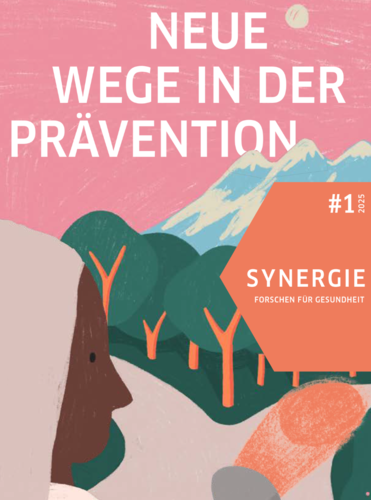
The cover of the spring issue of SYNERGIE Magazine