New insights into restrictive allograft syndrome (RAS): Researchers from the German Center for Lung Research (DZL) have conducted the first comprehensive investigation of cellular changes in RAS at single-nucleus resolution. They identified three distinct cell populations that together form a so-called “fibrotic niche”. Published in the European Respiratory Journal, the study provides important insights into the development of pulmonary fibrosis after lung transplantation and highlights potential targets for future therapies.
Restrictive allograft syndrome (RAS) is a severe form of chronic lung allograft dysfunction (CLAD). It is characterized by progressive scarring of transplanted lung tissue, histologically associated in particular with alveolar fibroelastosis (AFE). The underlying mechanisms remain poorly understood, and effective RAS-specific therapies are currently unavailable.
A research team led by first author Lena M. Leiber, a doctoral researcher in the group of BREATH principal investigator Prof. Dr. Jonas C. Schupp at Hannover Medical School (MHH), has now gained new insights into the cellular changes associated with RAS. The study was conducted in close collaboration with BREATH researchers Prof. Dr. Danny Jonigk from University Hospital RWTH Aachen and Prof. Dr. Jens Gottlieb from MHH. Numerous other researchers from the DZL site BREATH also contributed to the study.
Three Cell Populations Form a Fibrotic Niche
The researchers examined lung tissue from 15 patients who underwent lung retransplantation due to RAS, as well as nine healthy control lungs. Using single-nucleus RNA sequencing (snRNA-seq), they analyzed more than 105,000 cell nuclei. Additional histological examinations and micro-computed tomography (micro-CT) enabled the researchers to determine the spatial distribution of the identified cell populations.
The team identified three cell populations not previously described in RAS: aberrant basaloid cells, CTHRC1-positive fibrotic fibroblasts, and ectopic COL15A1-positive peribronchial vascular endothelial cells (pVECs).
Aberrant basaloid cells were detected in nearly all patients with RAS but were absent from healthy control lungs. These cells were concentrated at the interface between healthy and fibrotic lung tissue, known as the fibrotic edge. Together with the other two cell populations, they formed a characteristic fibrotic niche in this region. In addition, aberrant basaloid cells exhibited features of epithelial-to-mesenchymal transition and increased expression of integrin αvβ6.
Similarities with Other Fibrosing Lung Diseases
A comparable fibrotic niche has previously been described by the researchers in other progressive fibrosing lung diseases, including idiopathic pulmonary fibrosis (IPF) and pleuroparenchymal fibroelastosis (PPFE).
“What we find particularly interesting is that we identified cell populations and spatial structures in restrictive allograft syndrome that are already known from other fibrosing lung diseases. This suggests that, despite different underlying causes, similar cellular mechanisms may contribute to the progressive scarring of lung tissue,” explains first author Lena Leiber.
The pulmonary vascular architecture was also markedly altered: COL15A1-positive endothelial cells extended into tissue regions affected by alveolar fibroelastosis, while the PRX-positive alveolar microvasculature was partially lost. Micro-CT analyses confirmed extensive vascular remodeling.
Potential Targets for Future Therapies
The identified cell populations and signaling pathways open up new avenues for investigating targeted therapies. Further studies are needed to determine whether and how these molecular changes can be exploited therapeutically. However, the similarities with other fibrosing lung diseases suggest that findings and potential therapeutic approaches from IPF research may also be relevant to RAS.
Overall, the study provides important new insights into the mechanisms of chronic lung allograft injury and offers perspectives for therapeutic strategies targeting shared mechanisms across progressive fibrotic lung diseases.
Original Publication: L. M. Leiber et al. Aberrant and ectopic cell populations in restrictive allograft syndrome after lung transplantation. European Respiratory Journal. 2026;68:2500537. DOI: 10.1183/13993003.00537-2025.
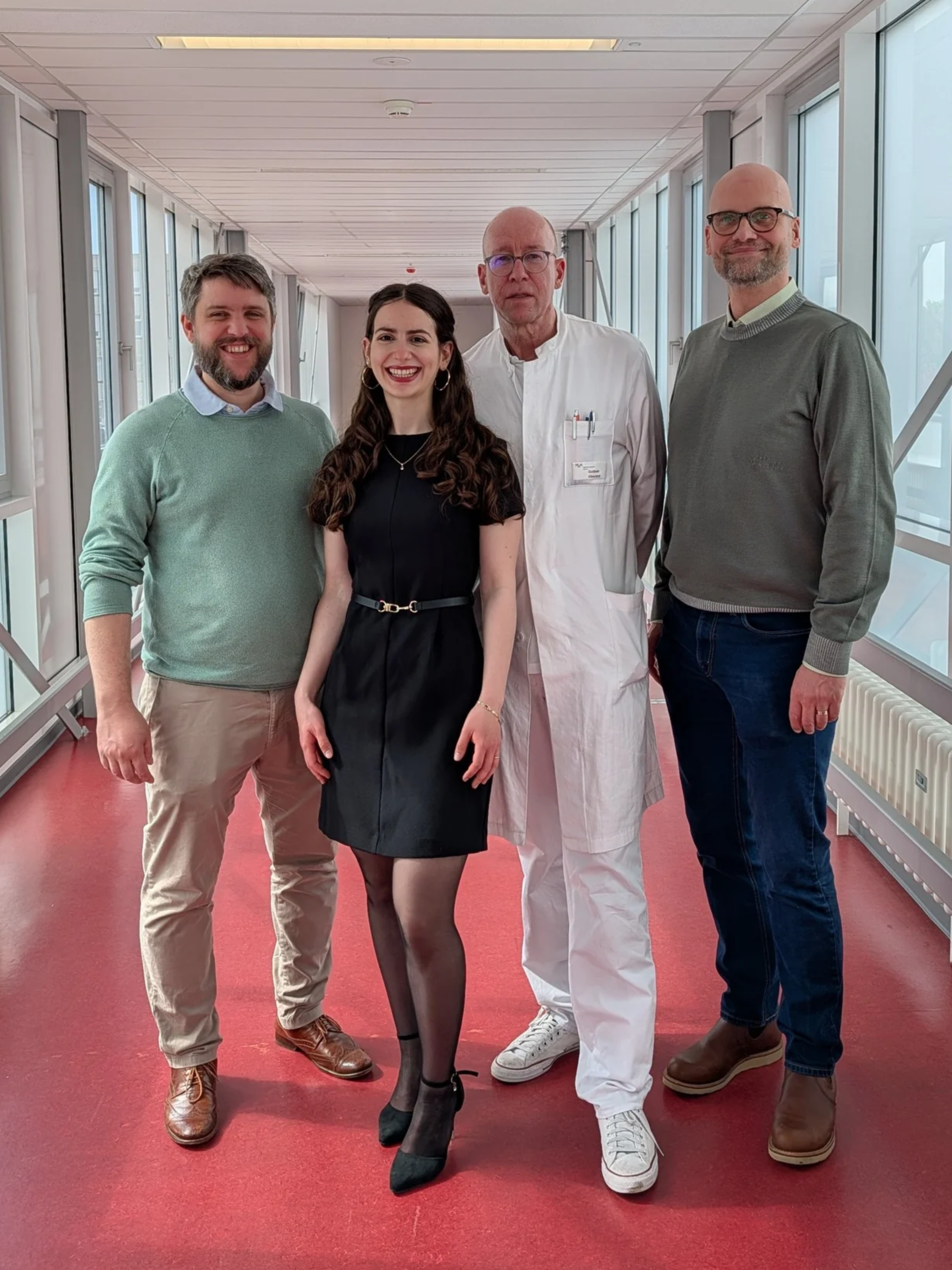
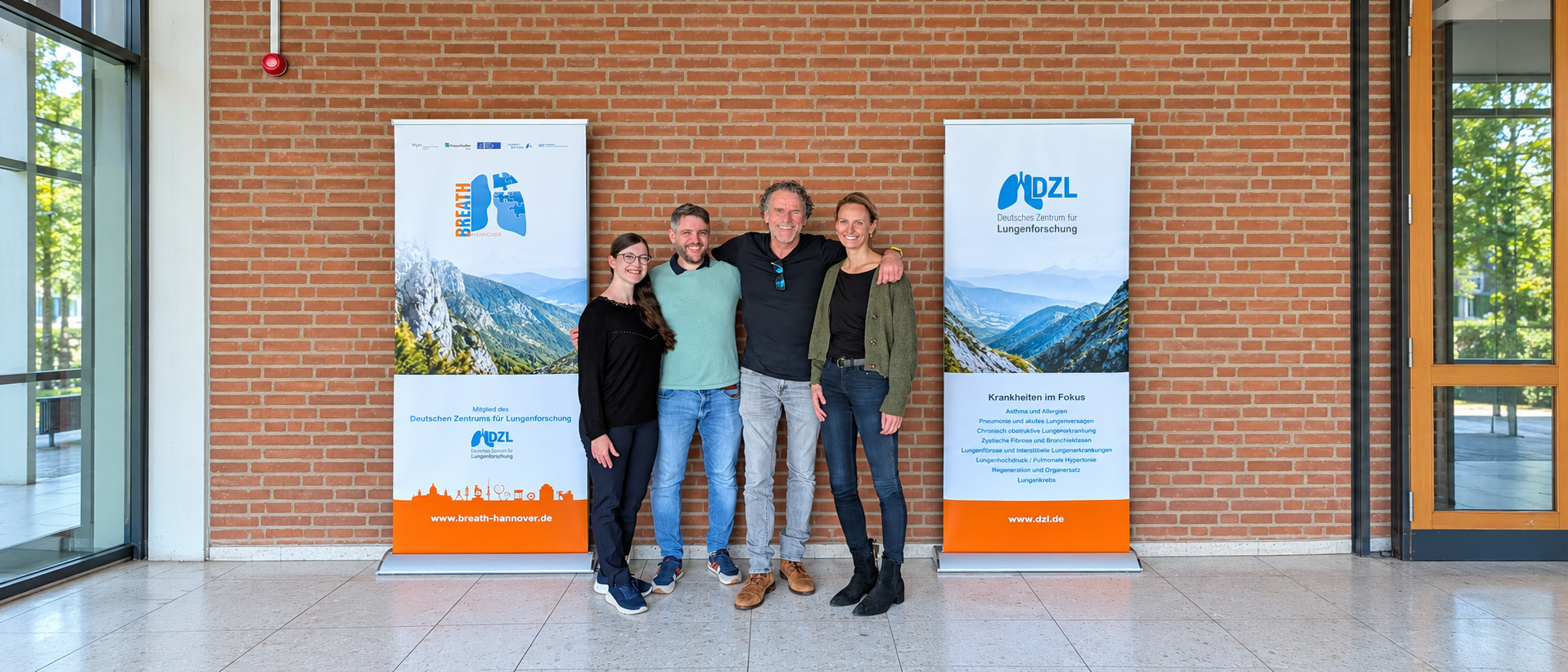
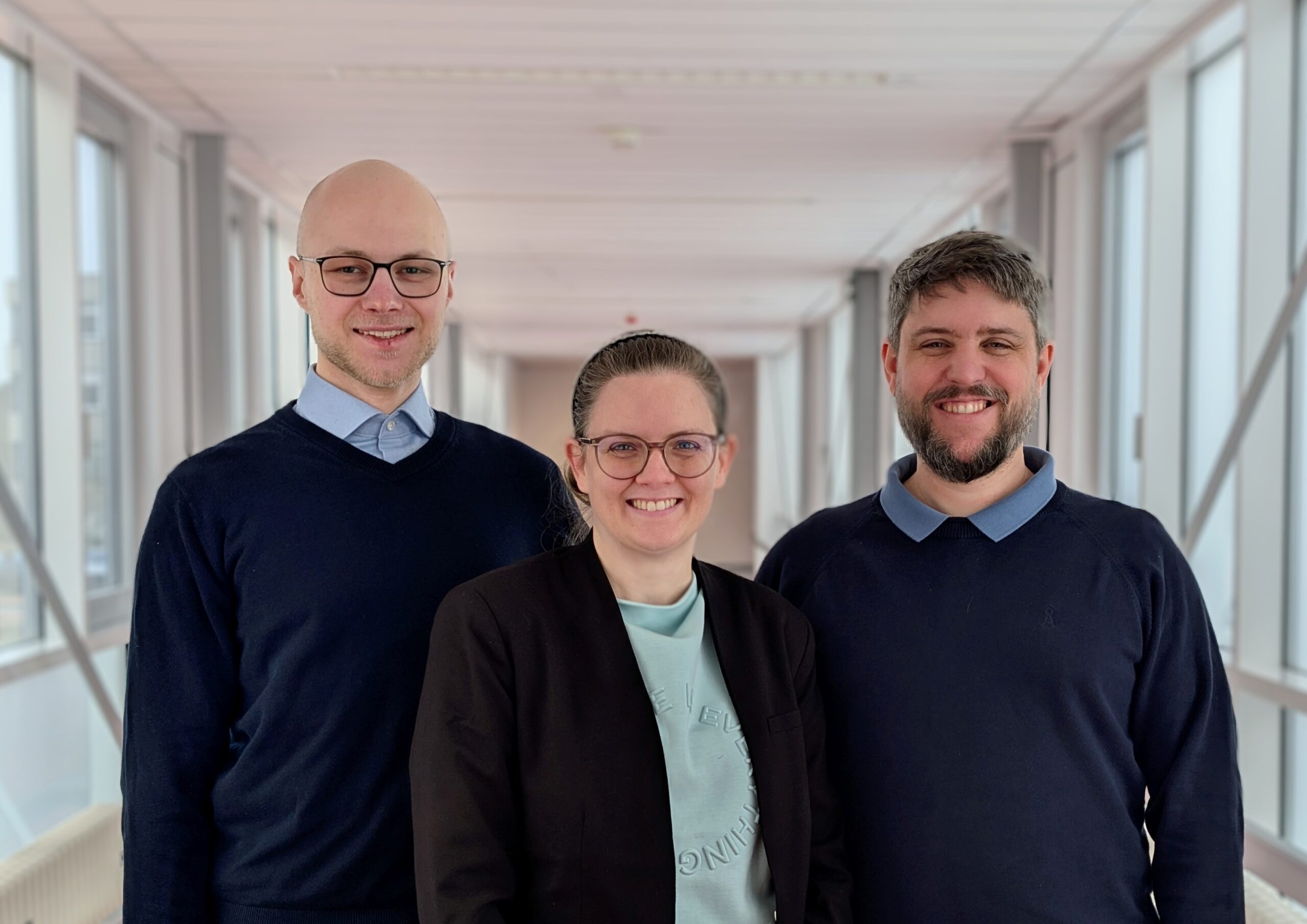
First author Lena Leiber conducts research on restrictive allograft syndrome (RAS) together with senior authors Prof. Dr. Jonas Schupp, Prof. Dr. Jens Gottlieb and Prof. Dr. Danny Jonigk (from left to right).