At this year’s Annual Meeting of the German Center for Lung Research (DZL), outstanding scientific work was recognized with poster awards. In our short series, we are presenting the award-winning projects involving researchers from the DZL site BREATH. In the category “Diffuse Parenchymal Lung Disease (DPLD)”, Annalea Brüggemann from Hannover Medical School received the Poster Award for her work on the immune architecture of bronchopulmonary sequestration.
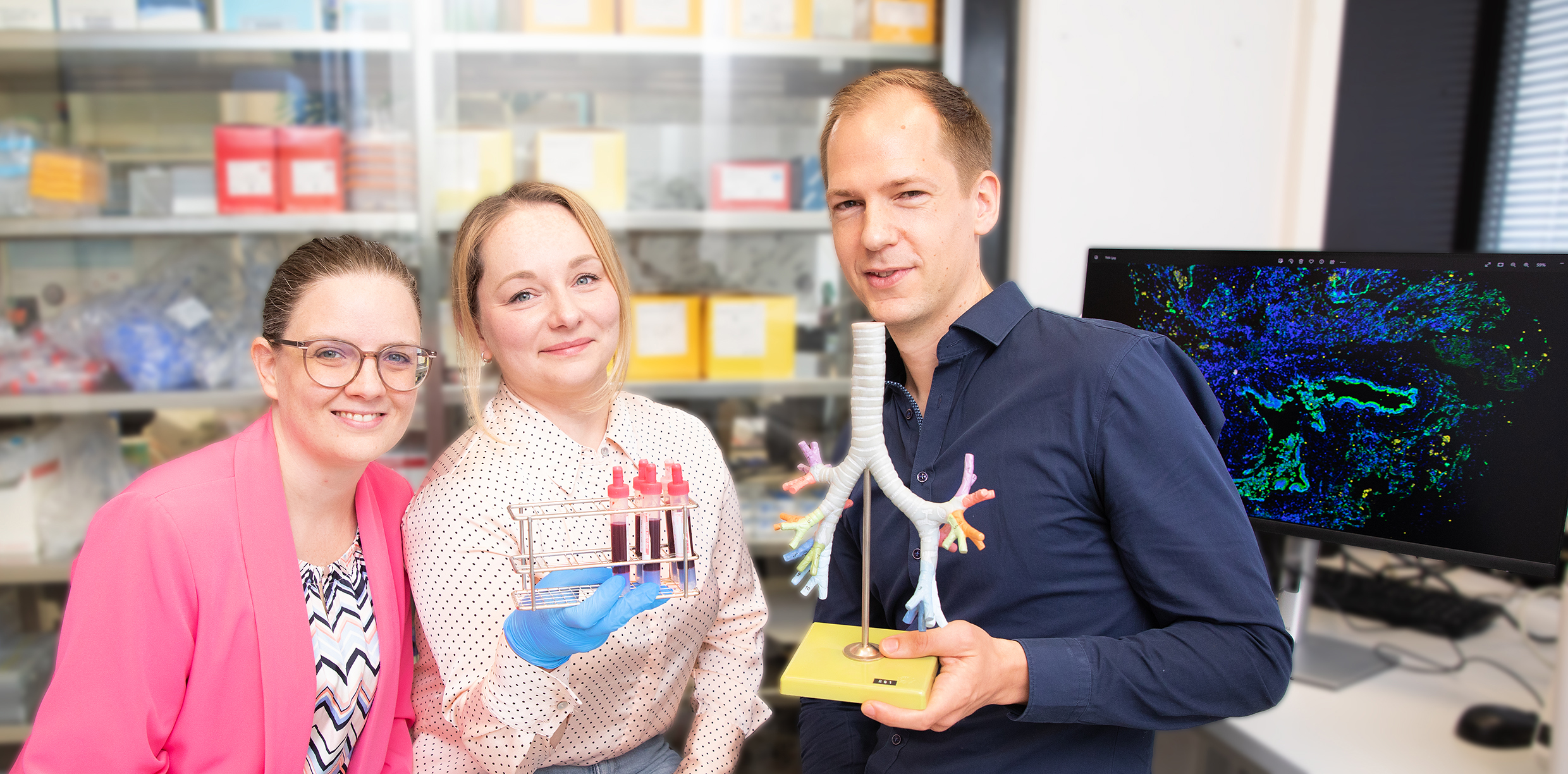
Annalea Brüggemann is a doctoral researcher at the Institute of Transplant Immunology at Hannover Medical School in the research group of Prof. Dr. Christine Falk. Together with colleagues from pathology and pediatric surgery, she is investigating how congenital malformations of the lung are associated with the development of the local immune system from early childhood onwards.
“I am very pleased about the Poster Award and the recognition of our work,” says Annalea Brüggemann. “We are particularly interested in understanding how changes in tissue structure influence the formation of local immune niches.”
When Lung Tissue Develops Differently
The award-winning project focuses on bronchopulmonary sequestration, or BPS. In this rare congenital malformation, non-functional lung tissue develops without a normal connection to the airways. Congenital lung malformations can be associated with recurrent infections and chronic inflammatory processes. However, little is currently known about how altered tissue architecture affects local immune development.
The researchers therefore compare BPS tissue with directly adjacent, unaffected lung tissue from the same young patients and additionally analyze blood samples. Using flow cytometry and high-resolution spatial transcriptomics, they can characterize the composition of immune cells and investigate how these cells are spatially organized within the lung tissue.
Interplay Between Tissue Architecture and Local Immune Development
The results obtained so far show that a local immune memory is already established in healthy pediatric lung tissue. The researchers identified tissue-resident memory T cells and memory B cells. In BPS tissue, by contrast, the immune cell composition was altered, with fewer memory cells overall and, in particular, a lower proportion of tissue-resident T cells.
The spatial organization of immune cells also differed depending on the tissue architecture. In sequestrations embedded within the lung parenchyma, immune cells accumulated around altered bronchial structures and enlarged blood vessels, forming organized local immune niches. In BPS tissue separated by its own pleura, however, pronounced remodeling of bronchial and alveolar structures was observed without a comparable organization of immune cells, particularly T cells.
These findings suggest that tissue architecture may be closely linked to the formation and spatial organization of local immune niches.
Expanding the Focus to Other Congenital Lung Diseases
The team is currently extending its investigations to other congenital lung malformations, particularly congenital pulmonary airway malformation (CPAM). The findings will also be compared with pediatric interstitial lung diseases.
Further single-cell analyses are intended to help characterize different cellular states and molecular signaling pathways across the various diseases in greater detail. The aim is to gain a better understanding of how different tissue architectures and disease processes influence the composition and spatial organization of the local immune system in the pediatric lung.
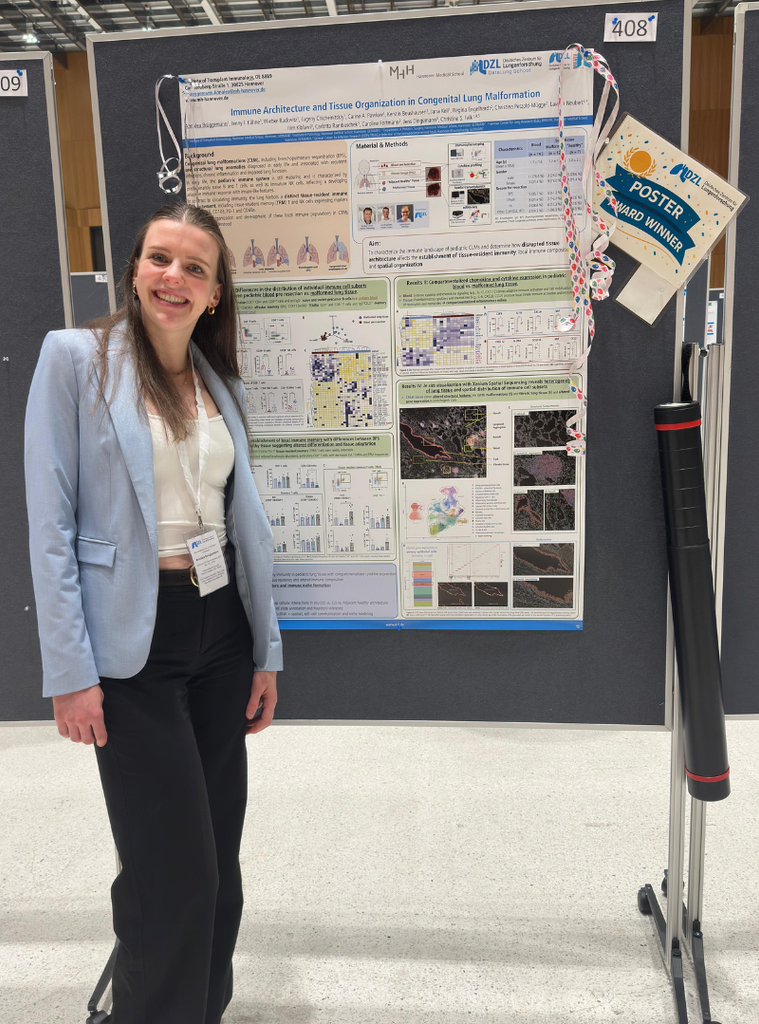
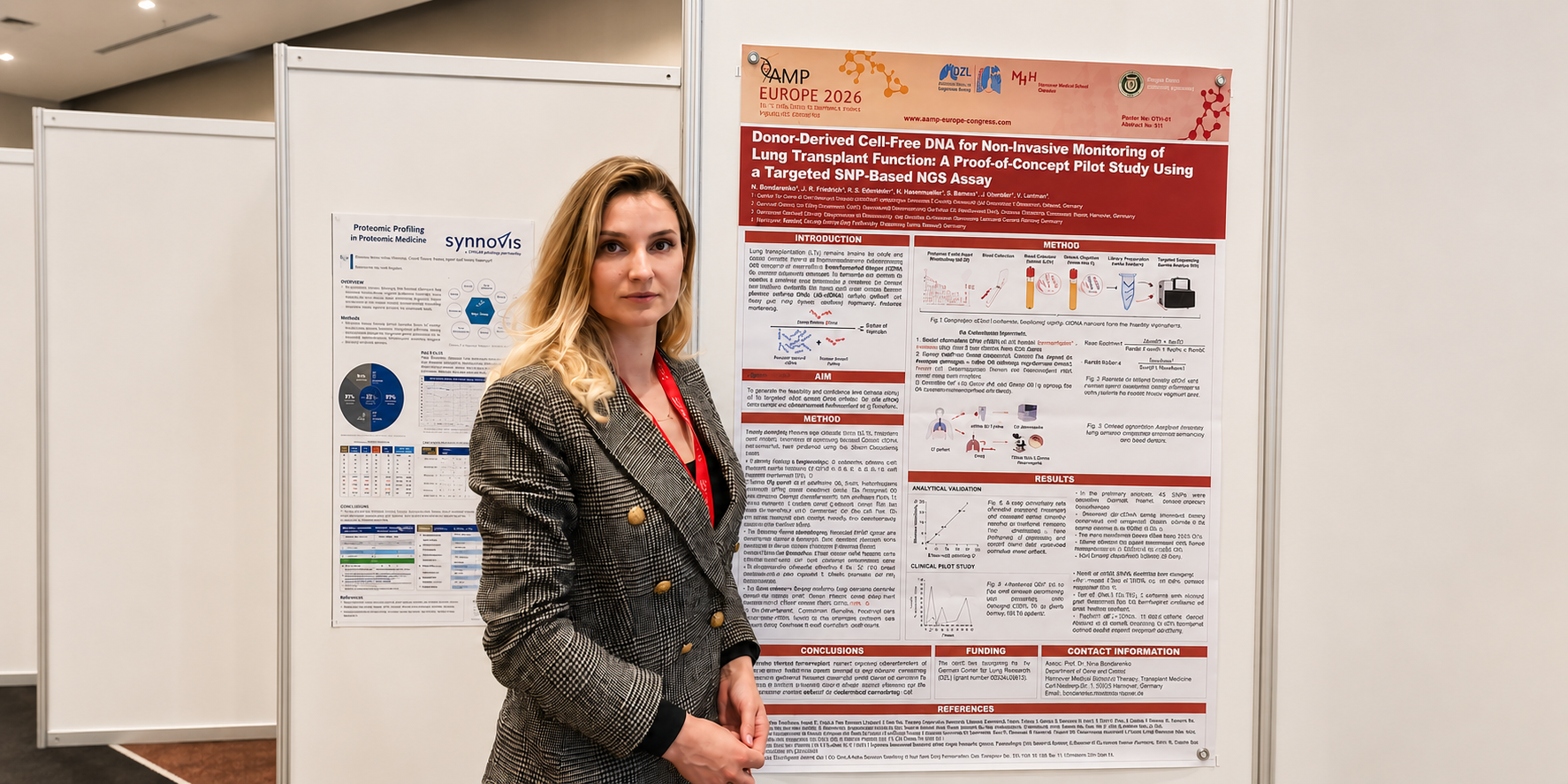
BREATH doctoral researcher Annalea Brüggemann with her award-winning poster at the DZL Annual Meeting (Photo: private)