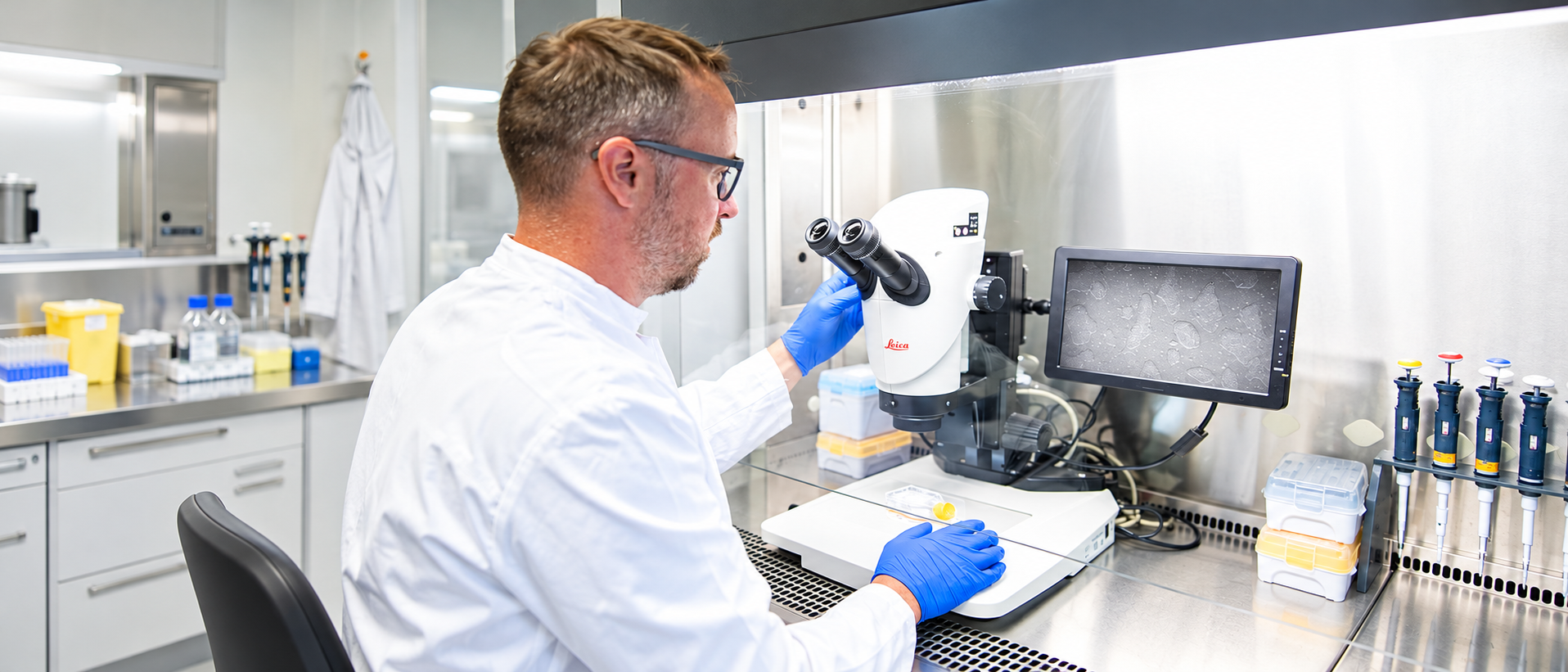
Researchers at Hannover Medical School (MHH), together with international partners, have successfully achieved targeted gene correction in patients with alpha-1 antitrypsin deficiency (AATD) for the first time. Scientists from the German Center for Lung Research (DZL) at the BREATH site were also involved in the development and clinical implementation of this new therapeutic approach. The first results have been published in the scientific journal Journal of Hepatology.
Alpha-1 antitrypsin deficiency (AATD) is an inherited metabolic disorder in which a genetic defect leads to insufficient production of functional alpha-1 antitrypsin (AAT). This protein is primarily produced in the liver and protects the lungs in particular from damage caused by the body’s own enzymes. A deficiency of this protective protein can lead to serious conditions such as pulmonary emphysema, liver fibrosis, or liver cirrhosis. Until now, available treatments have mainly addressed the consequences of the deficiency rather than correcting its underlying genetic cause.
A research team from the Department of Gastroenterology, Hepatology, Infectious Diseases and Endocrinology and the Department of Respiratory Medicine and Infectious Diseases at MHH, in collaboration with Renji Hospital in Shanghai, has now applied a novel gene therapy approach in a clinical setting for the first time. Seven patients were treated as part of a clinical trial using a technique known as base editing, which directly targets the disease-causing genetic mutation.
Four researchers from the DZL site BREATH contributed to the publication: PD Dr. Nora Drick, Dr. Julia Held, Prof. Dr. Sabina Janciauskiene, and Prof. Dr. Marius Hoeper. Their expertise combines molecular and cell biological research into alpha-1 antitrypsin deficiency with the clinical care of patients affected by this genetic disorder at MHH.
Targeted Correction of the Genetic Defect
The new treatment is based on an advanced application of CRISPR/Cas9 technology known as base editing. Unlike conventional gene therapy approaches, this technique does not introduce an additional functional copy of the affected gene into the cells. Instead, it precisely corrects a single faulty DNA building block in the genetic material of the liver cells responsible for producing alpha-1 antitrypsin.
“For many years, we have been investigating the molecular mechanisms underlying alpha-1 antitrypsin deficiency and the effects of the altered protein on cells. The fact that we can now directly target the genetic cause of the disease and precisely correct the faulty DNA building block represents an important step towards translating basic research into a treatment that addresses the underlying cause,” explains Prof. Dr. Sabina Janciauskiene, a researcher at the DZL site BREATH who has been studying alpha-1 antitrypsin deficiency for many years.
By specifically modifying the faulty DNA base, the procedure activates the cell’s own repair mechanism, which corrects the genetic alteration without creating a complete double-strand break in the DNA.
Following many years of preclinical research, the approach has now been applied to patients with alpha-1 antitrypsin deficiency for the first time in collaboration with Renji Hospital in Shanghai. Initial results show that the treated patients are once again able to produce functional alpha-1 antitrypsin.
New Perspectives for Patients with AATD
For people with severe alpha-1 antitrypsin deficiency, gene correction could fundamentally change treatment options in the long term. Until now, many patients with severe lung disease have received so-called augmentation therapy, in which the missing protective protein is regularly administered through intravenous infusions. This treatment generally has to be continued for life.
The case of Katrin H., a 55-year-old patient from Hannover, illustrates the considerable burden of the disease. Due to progressively worsening shortness of breath, she had to give up her work as an anaesthesiologist. She was not diagnosed with severe alpha-1 antitrypsin deficiency until 2011. “The symptoms are often non-specific, which is why the disease is frequently diagnosed late,” explains PD Dr. Nora Drick, a pulmonologist at MHH and researcher at the DZL site BREATH. “Initially, the condition is often mistaken for bronchial asthma.”
In March 2026, Katrin H. travelled to Shanghai to receive the new treatment. Following a single infusion of the gene therapy, blood tests showed that her body was once again producing functional alpha-1 antitrypsin. No side effects have been observed in her so far, and her previously required weekly augmentation therapy has since been discontinued. “For me, it’s like winning the lottery,” the patient says.
However, gene correction cannot reverse damage that has already occurred in the lungs and liver. Whether the treatment can prevent further disease progression in the long term will need to be determined through continued clinical follow-up.
Continuation of the Clinical Trial at MHH Planned
The clinical trial is scheduled to continue at MHH in mid-2027. This could allow additional patients in Hannover to access the treatment, which has not yet been approved for routine clinical use, as part of a clinical study. In the long term, the base-editing approach could also be suitable for treating other inherited disorders caused by individual faulty DNA building blocks.
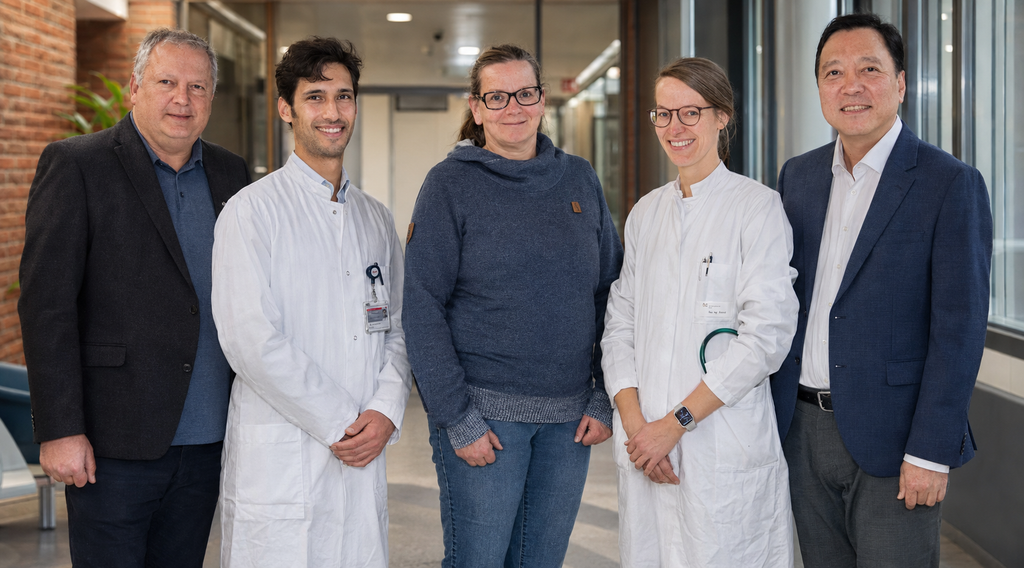
Celebrating the successful treatment of alpha-1 antitrypsin deficiency through gene correction (from left): Prof. Dr. Michael Ott, Dr. Dr. Simon Krooss, patient Katrin H., PD Dr. Nora Drick, and Dr. Qinggong Yuan. Copyright: Karin Kaiser/MHH

Patient Katrin H. during her treatment at a hospital in Shanghai. Copyright: Michael Ott/MHH