Platform Biobank

The goal of the DZL Biobanking platform is the quality-assured and standardized collection, processing, storage, management, and provision of biological samples, as well as the collection of associated clinical data related to a wide range of lung diseases, while adhering to all necessary legal standards. To this end, information and consent documents, as well as biobank processes within the DZL, have been harmonized, and a data protection concept has been developed.
The HUB manages and stores numerous sample collections from BREATH with various sample types.
The biological samples, along with associated quality data, are made available to researchers for scientific purposes upon request. This enables researchers within the DZL as well as external cooperation partners to access biological samples and data easily and in compliance with regulations.
The Hannover Unified Biobank (HUB), as the central and modern biobank of the Hannover Medical School (MHH), facilitates sophisticated biobanking at the DZL site BREATH according to the highest quality standards.
The HUB collects, processes, and manages biological samples (blood and blood derivatives such as plasma, serum, and buffy coat, as well as DNA, swabs, urine, stool, and other bodily fluids) according to standardized procedures and has a high degree of automation. The state-of-the-art HUB infrastructure includes high-quality laboratory and storage robotics and extensive sample tracking, allowing for seamless traceability of biological samples. All sample data is managed in a professional biobank information management system (CentraXX, Kairos). A high-quality security and alarm system ensures the highest sample safety.
The biobank processes comply with the biobanking standard ISO 20387:2020 and have been DAkkS accredited for robot-processed plasma samples since 2024. The quality management system of the HUB has been certified according to DIN EN ISO 9001 since 2015.
Platform Bioinformatics

Through modern investigative technologies, increasingly differentiated data from patients can be collected for medical research, including genomic, transcriptomic, epigenomic, and metabolomic data. Expertise in the fields of computer science, programming, and statistics is required for the processing and evaluation of these extensive datasets. Bioinformatics combines in-depth knowledge of biology with that of computer science, enabling researchers to gain new insights from the collected data.
Current research in the field of bioinformatics includes:
- Microbiomics / Metagenomic analyses
- Comparative transcriptomics (RNA-seq, microarrays)
- GWAS (genome-wide association studies)
- Metabolomics
At the BREATH site, we are continuously expanding our human resources to be a driving force for forward-looking medical research and to cooperate with other DZL locations. The platform of bioinformatics illustrates the strength of the DZL in the cross-location exchange of analytical capacities and contributes sustainably to the future-oriented research of lung diseases.
Platform Data Management

Data Management
Data management encompasses the provision, administration, and safeguarding of infrastructural and methodological resources and processes that ensure efficient and optimal use of scientific data. With the continuously growing volumes of data in the medical field, the importance of structured data management has significantly increased in recent years.
At the German Center for Lung Research (DZL), data from all five participating sites are consolidated, harmonized, and standardized to create a consistent and high-quality data foundation for scientific investigations. The heterogeneous nature of this data requires careful unification, simplifying the exchange and use for research purposes. In addition to data integration, adherence to a complex rights and roles system is necessary to meet data protection requirements and ensure transparent and secure data usage.
The efficient provision of this data for research purposes is a central component of the work of data managers at each location. Moreover, comprehensive data preparation forms an essential basis for the application of artificial intelligence (AI) methods. AI models and machine learning are increasingly integral to medical research, and their performance heavily depends on the quality and availability of the underlying data. Thus, the data management platform also supports the development and application of AI-based analytical methods.
Statistics
Medical statistics and epidemiology are core areas in the investigation of disease causes, risk factors, and their relationships. They also contribute to the analysis of prevalence, incidence, and spread of diseases, such as infectious diseases. Within the data management and statistics platform, scientific questions are methodically designed, statistical methods are developed, and data analysis is conducted to achieve meaningful results.
At the BREATH site, researchers can access comprehensive consulting on statistical and methodological issues or optimize their projects with the support of a statistician. This enables precise study planning and ensures analyses are conducted according to the highest scientific standards. The platform also works closely with the bioinformatics platform, thereby combining classical statistical methods with modern bioinformatics approaches. This interdisciplinary approach facilitates the efficient evaluation of complex data structures and creates the foundation for innovative scientific insights.
Platform Imaging
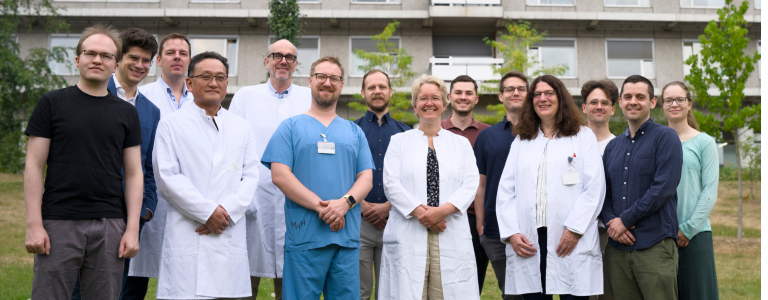
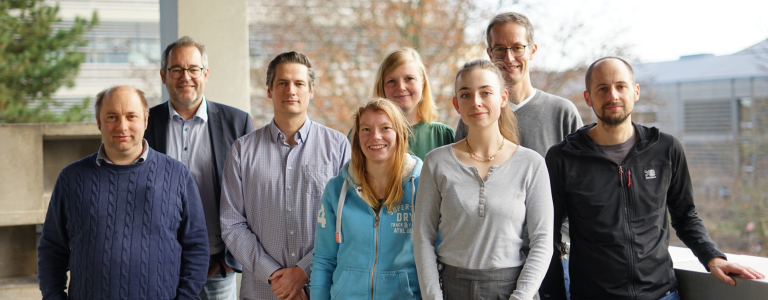
Imaging techniques like, for example, microscopy and magnetic resonance imaging (MRI), are key instruments in understanding living systems. The imaging platform of the DZL, with its state-of-the-art imaging technology, constitutes a success factor of the DZL. This concept is in line with the European Strategy Forum on Research Infrastructures (ESFRI) and particularly with the policy of the Euro-BioImaging Project. The imaging platform should guarantee the use of the latest imaging technology for the research carried out within the DZL.
The platform pools the existing skills of all DZL partners and provides the following:
- Instruction and project coordination with regard to imaging and its management
- Stratification of structures and functional representations
- Central administration, standardization of guidelines
- Quality management
- Imaging technology training
- Guarantee of the adherence to ethical and legal guidelines
- Implementation of the principles of Good Scientific Practice
The platform covers the whole spectrum of imaging techniques and levels of resolution, from radiological imaging of the complete human lungs to small animals (CT, microCT, MRT, PET, FMT), as well as from high resolution electron microscopy (TEM, cryoEM, electron tomography) to quantification of the lung structure (stereology).
Pulmonary Pathology Platform
Material from the human lung is particularly valuable for translational research: it is essential for testing and understanding the mechanisms of the highly diverse pulmonary diseases, such as chronic obstructive pulmonary disease (COPD), pulmonary hypertension, pulmonary fibrosis or others.
Due to its exceptional importance, a separate platform for pulmonary pathology was established within the BREATH research network in 2014. This platform is based at Hannover Medical School (MHH), one of the largest lung transplant centers in the world, and provides clinicians and researchers in the German Center for Lung Research (DZL) with a sophisticated logistics system (including 24h on-call service and processing of fresh material / 7 days a week), the latest histopathological and molecular pathological diagnostics and valuable lung material of outstanding quality.


Research Projects at BREATH
The Lung Research Group at the Institute of Pathology, consisting of around 25 members, investigates pulmonary vascular diseases and interstitial lung diseases. In addition, the group focuses on infectious lung diseases such as COVID-19 and its long-term effects, post-lung transplantation pathologies (e.g., chronic graft failure), congenital lung developmental disorders (e.g., alveolar capillary dysplasia), and lung tumors. Central to their work is the integration of clinical questions with tissue morphology, molecular pathology findings, and multi-omics data.
Selected Research Projects:
• Pulmonary Vascular Diseases
– Analysis of pathological niches and plexiform lesions in PAH
– Identification of blood biomarkers to distinguish PAH from PVOD using plasma proteomics
– Study of mesenchymal transitions in human lung tissue
• Interstitial Lung Diseases
– Impact of tissue stiffness on disease progression
– Role of nanoparticles in pathophysiology
• Chronic Graft Failure
– Spatial tissue characterization and blood biomarkers in chronic graft failure and long-term survivors
Based on core research areas numerous advanced projects and collaborations have been established at BREATH, both nationally and internationally. Among other things, fresh tissue from explanted recipient lungs is used to answer diverse research questions within interdisciplinary projects.